



US President Donald Trump decided to lift the sanctions on Russian oil, gas and coal exports, a measure that represents an economic relief for the Kremlin in the midst of the war in Ukraine and has caused strong criticism by the Ukrainian government.
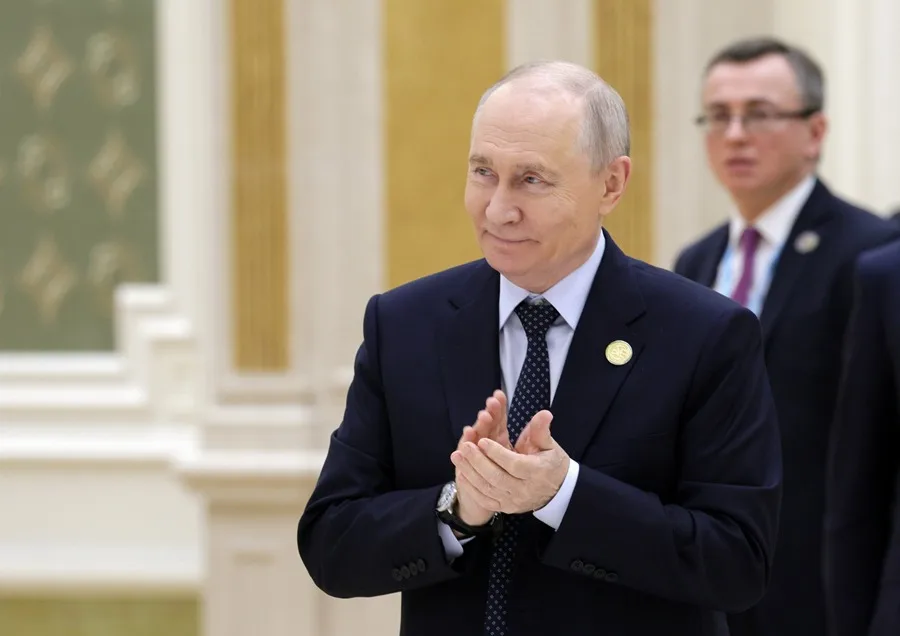
The decision takes place a few days after the 74th birthday of Russian President Vladímir Putin, held on October 7. Although Trump did not publicly congratulate him, the measure represents a significant change in the policy of energy restrictions imposed on Moscow since the beginning of the Russian invasion.
Putin had on several occasions held that an energy truce between Russia and Ukraine would not solve the difficulties of the international market and that the resumption of Russian exports of oil and derivatives was necessary to stabilize supply.
A relief for the Russian economy
The American measure comes at a complicated time for Russian finances. According to data cited by EEF, the country's revenues from oil exports have decreased by 17 % this year, despite the increase in crude oil prices.
Russia also faces an economic stagnation and a government deficit equivalent to 2.2 % of its gross domestic product (GDP), which, according to the forecasts mentioned in the report, could reach 3 % at the end of the year.
In the face of this situation, the Russian Government has resorted to tax increases and other austerity measures while seeking to approve a defence budget for the next three years, with a projected military expenditure of $600 billion.
Russian analysts believe that Trump's decision is in part in line with his internal political interests, in the face of the US elections on November 3. They also interpret the lifting of sanctions as a sign that Russia has room to negotiate with Washington.
Politologist Malek Dudakov held to local media that the U.S. administration seeks to improve its popularity and avoid an electoral defeat, while Moscow tries to take advantage of the stage to gain advantages in the war negotiations.
Zelenski criticizes Trump's decision
Ukrainian President Volodímir Zelenski rejected the agreement and called it a gift to Putin, considering the measure to be unsuitable for an ally. The decision was also criticized by representatives of the European Union and US congressmen from both parties.
The dispute is taking place as attacks on energy infrastructure continue and peace negotiations remain stalled. According to information cited by EFE, more than 100 Ukrainian civilians died during the last week, according to United Nations data.
Trump has questioned Ukrainian attacks on Russian refineries and argued that their consequences affect the world market, including diesel fuel prices and costs for US farmers and farmers.
The president also again questioned Zelenski's leadership by saying that Ukraine needs a new president, a position that adds tension to the relations between Washington and Kiev.
According to the American media Axios, Trump had tried to convince Zelenski on several occasions to suspend the attacks on Russian refineries. The Ukrainian president, on the other hand, would have conditioned this pause on Russia's stopping the bombing of Ukraine's energy infrastructure.
Ukraine threatens to maintain attacks
Despite the US decision, Ukraine maintains its strategy of attacking Russian energy facilities. According to the EEF report, since June, Ukrainian drones have hit around 30 refineries, some of which have had to suspend operations, reducing the country's oil processing capacity.
On Friday, Ukrainian forces attacked a refinery in the Siberian region of Omsk, located about 3,000 kilometres from the border, while on Saturday an oil terminal was reached in the Rostov region of southern Russia.
The international relations specialist Fiodor Lukiánov predicted that Kiev will try to block the agreement. Other Russian analysts believe that Moscow should not make its military decisions subject to the political interests of the United States or Ukraine.
Ukrainian sources cited by international media, for their part, maintain that attacks on refineries will continue until an energy truce is reached.
The lifting of sanctions thus opens a new chapter in the Washington-Moscow relationship, while differences persist over the conditions for stopping the war and the possibilities for resuming peace negotiations.
Source: EFE.