



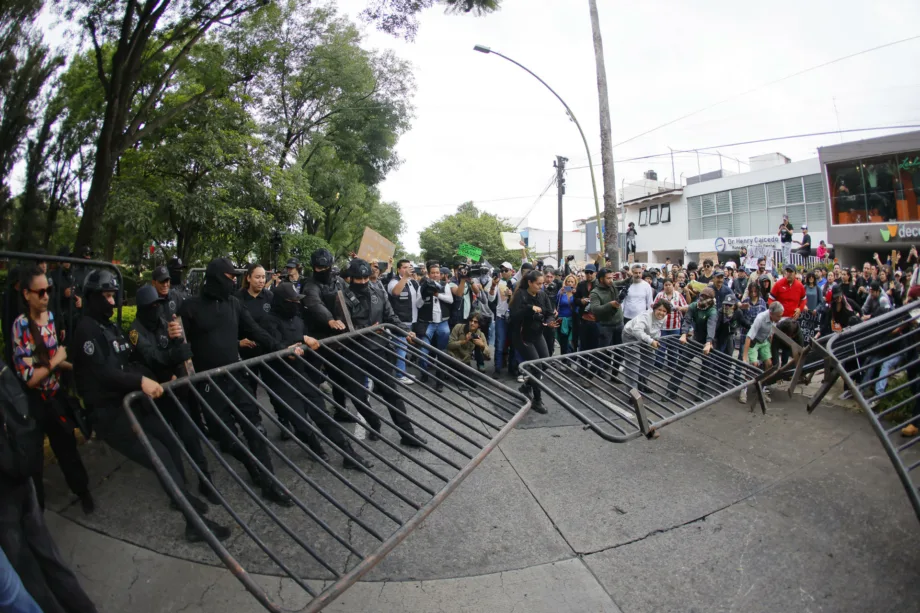
Thousands of inhabitants of the conurbated area of Guadalajara (western Mexico) showed up this Sunday to demand a health alert for the poor quality of water that they reported has been home for months with fecal coliforms and heavy metals, causing disease and skin problems.
With slogans such as “water is a right, not a privilege!” and “clean water, clean water!,” about 10,000 people of all ages took to the streets to demand a solution to the problem.
Since March, at least 320 colonies have received in their homes contaminated and sewer-like water containing heavy metals, faeces and which has not been chlorinated, as reported by the Justice for Peace and Development Centre (Cepad), after examining the samples.
The poor water quality is three years old in the city, but it has been more acute since March and has reached its most serious peak in the last three weeks, as reported by the protesters, caused by alleged illegal discharges in the Las Pintas dam, which extends to the second most important city in Mexico.
By the pressure of the public, the governor of the state of Jalisco, Pablo Lemus, announced last Monday the temporary closure of the contaminated dam, which will reduce the water available to 30 % and will force to make weekly rationations that will leave people without the liquid for one or two days.
The corruption and the poor financial management of the water distribution agency, together with obsolete infrastructure, aggravated the problem, as documented by various organizations and the media.
The community has diseases, such as the daughter of Juan Camacho, who presented a rash and intense itching throughout the body at the end of September. His dermatologist attributed it to contaminated water and since then he must bathe with bottled water, the citizen told EFE.
“She has had some dermatitis problems, she has had a feeling of it (with) hives, itching, that kind of thing. I have noticed a lot that when one, for example, is washed, your face is still burning, which was not the case before,” Camacho said.
The man comments that his neighbors were sick of the stomach or skin, “especially the little children,” he regretted.
Citizen and scientific organizations found faecal faeces and bacteria, as well as heavy metals such as mercury and cadmium in water samples of 200 colonies.
Fabiola Elvira, a neighbor of the district of Analco, told EFE that the filters she installed since March are insufficient to relieve the smell of pipe, which inundate her house each who opens the pass key.
“It started getting worse more like three weeks ago. The water coming out of the aljibe made foam, had a triangulite of foam and around the triangulite was coffee. There was a blue cream in the water. This is very serious,” he said.
In addition to the underground tank, the neighbor uses bottled water to clean the loza and food, and to wash the family face and hand. This represents an extra cost of 500 pesos (about $27) a week that can barely be covered, forcing her to bathe with dirty water.
This motivated her to express herself to demand that health authorities declare health alert, that water providers solve the problem, or at least guide the public on how to care.
“There has been no interest on the part of the government in that there is not even a solution, in that there are palliative measures to this. The truth is that that's very sad, it's very sad,” he said.
Contaminated water also reaches shops, schools and hospitals in the city. Last Wednesday, people receiving haemodialysis reported the suspension of their therapies because the water received by one of the public clinics cannot be used for this.
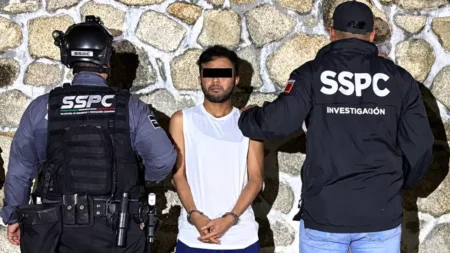
The demonstration culminated in at least nine people being arrested, four with unknown whereabouts and dozens of wounded, including press representatives, after anti-montine police were repressing the progress of the protesters seeking to reach the governor's residence.