





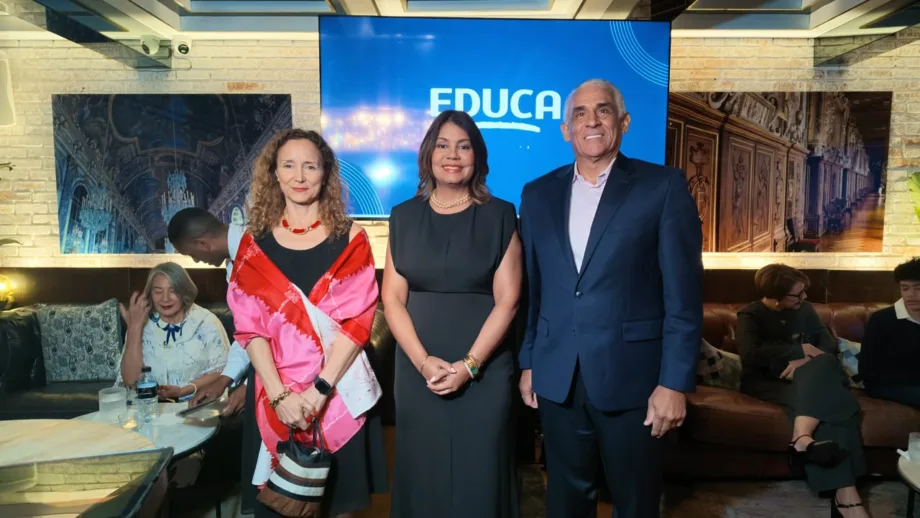
The organization Acción Empresarial por la Educación (EDUCA) celebrated the 30th anniversary of the Congress, learning with a call to strengthen the quality of learning in the Dominican Republic, a challenge that, according to its representatives, requires ensuring teaching hours, improving education strategies and promoting greater participation of families in the education of their children.
During the activity, the president of Business Action for Education, Susana Nadal, recognized the progress of the Dominican education system over the past two decades, although she warned that there are still important opportunities for improvement, especially in the academic results of the students.
The executive said that compliance with the school calendar is a fundamental condition for raising the performance of the students and ensuring that they receive the necessary training.
«The first thing is school hours. The outages that result in lost hours are against the student, who obviously receives less hours of teaching,» said Nadal.
It also considered it essential that resources for education should be translated into concrete results, particularly in the development of basic skills such as reading, writing and mathematics.
EDUCA brings together thousands of teachers in the Learning Congress
The thirty-seventh edition of the Learning Congress includes two day-to-day training for approximately 800 teachers from different educational institutions.
The meeting was preceded by a three-week virtual pre-congress, in which about 5,200 educators from different provinces of the national territory participated.
Under the motto «Building bridges between school, community and families,» the activity seeks to provide pedagogical tools that will enable the current needs of the classrooms to be met and to strengthen the relationship between the different actors in the education system.
The topics included in the programme include the prevention of cyberharassment, innovation in educational processes, the use of technological tools and the participation of parents in the training of their children.
The initiative also promotes opportunities for the exchange of experiences between teachers, with the aim of identifying practices that can contribute to the improvement of teaching.
Susana Nadal calls for prioritizing learning results
The organization's president noted that one of the challenges in the country is to ensure that investments in the education sector have a direct impact on the training of students.
In this regard, he raised the need to pay particular attention to the first years of schooling, a stage at which the fundamental skills for further learning are developed.
Nadal stressed the importance of strengthening early interventions in lectowriting and mathematics, with the aim of addressing the difficulties that students may face in a timely manner.
He also stressed that families should take an active role in school attendance, because their participation can promote the continuity of educational processes outside the classroom.
His statements were made in the context of the three decades of a meeting dedicated to the professional updating of the Dominican Magisterium.
Yahaira Sosa highlights the importance of bringing together schools and families
For her part, the executive director of the institution, Yahaira Sosa, expressed her satisfaction at reaching the thirty-seventh consecutive edition of the Learning Congress, a celebration that coincides with the entity's 37 years of career.
«We are glad to get to the 30 version of the Congress, learning in an uninterrupted way, this being the largest training event, both of EDUCA and the Dominican Republic,» he said.
Sosa explained that this year's theme responds to the need to establish closer links between schools, families and communities.
«This year we have been building bridges to learn, promoting the links between school, family and community, so that we can contribute to this improvement of learning,» he said.
The Executive Director noted that achieving better educational results requires a joint participation of the sectors involved, because the responsibility for training the new generations does not lie solely with the teachers.
In this context, he stressed the importance of building partnerships to support the academic development of students and to address the difficulties they face during their training.
Improving education remains an outstanding task
In assessing the challenges of the Dominican education system, Sosa recognized that, despite the progress made, the quality of the learning remains one of the main tasks to be done.
The representative explained that the organization works on research and proposals aimed at contributing to the design of evidence-based public policies.
«It is still a debt to improve learning and that is what we are in: we are trying to investigate and propose improvements in evidence-based public policies,» he said.
Its approaches highlight the need to assess the difficulties affecting school performance and to promote measures that meet the conditions of educational institutions.
The executive also stressed the importance of keeping the discussion space open on educational policies, especially when there are differences between the sectors involved in decision-making.
They call to work together by students
During his intervention, Yahaira Sosa called on government authorities, companies, universities, school directors, teachers and families to strengthen cooperation in support of Dominican education.
He considered that dialogue should be maintained as a key tool for building agreements that would help improve the quality of education.
«Adults can have differences in how to achieve that improvement of learning, but dialogue must always be open, with the learning of our children at the center of conversation,» he concluded.
With this new edition of the Learning Congress, the organization seeks to continue to provide training opportunities for educators and to promote a shared vision of the challenges of the school system.
The meeting also aims to strengthen the commitment of the different sectors to an education that prioritizes learning results and responds to the needs of Dominican students.