





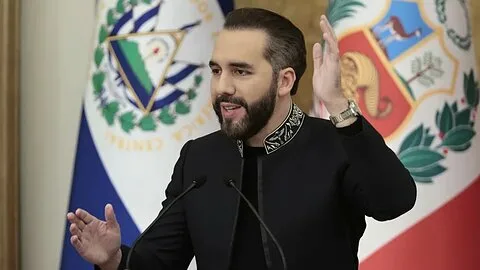
El Salvador's President, Nayib Bukele, is planning to register his candidacy for a third consecutive term on Thursday, November 19, in the face of the general elections of February 28, 2027, in the midst of an offensive against gangs in Haiti and of questions about its security policy.
Bukele, 45, maintains a close approval of 80%, according to AFP reports, driven mainly by its anti-gang strategy, which has contributed to a significant reduction in the levels of crime in El Salvador. In seconds. do + 1
The president will seek a new six-year presidential term, after the Legislative Assembly, dominated by its New Ideas party, approved in July 2025 a constitutional reform that allows for indefinite re-election, extends the presidential mandate and eliminates the second round of elections.
Bukele seeks to consolidate its security policy
Since March 2022, the Salvadoran Government has maintained an emergency regime as part of its strategy against criminal organizations.
Although this policy has been widely supported by sectors of the population due to the reduction of violence, international human rights organizations have reported arbitrary detention, torture and death in State custody.
According to AFP, more than 93,000 persons have been detained under the emergency regime, while human rights organizations question the conditions of detention and judicial guarantees. In seconds. do + 1
Gang operations in Haiti
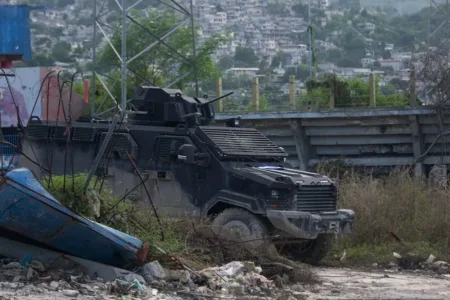
The presidential candidacy coincides with the participation of Salvadoran forces in operations against armed groups in Haiti.
According to international reports, the Salvadoran military deployment is over 2,000 and is taking place in the midst of tensions related to the alleged abduction of four members of its forces in October.
The intervention has generated international attention for the scope of the operations and the possibility of expanding the Salvadoran military presence on Haitian territory. In second
Constitutional reform allows for new Bukele candidacy
The reform adopted on 31 July 2025 changed the Salvadoran electoral rules by establishing the indefinite presidential re-election and extending the period of government from five to six years.
It also advanced the completion of the current mandate of Bukele in June 2027, with the aim of unifying the presidential, legislative and municipal elections. Legislative Assembly of El Salvador
In the next elections, Bukele will compete with opposition candidates, including Rafael Aguirre, the Farabundo Martí Front for National Liberation (FMLN), and Maytee Iraheta, of the National Republican Alliance (ARENA).
The registration of his candidacy before the Supreme Electoral Court represents a new step in his intention to continue to head the Salvadoran Government.