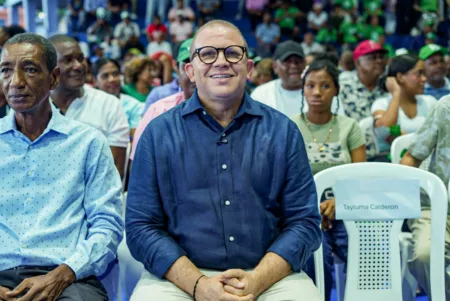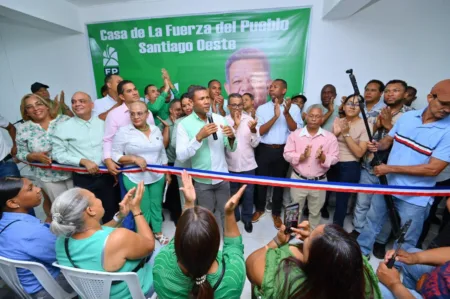






The President-in-Office of the Dominican Liberation Party (PLD), Abel Martínez, questioned the Government's response to the commercial opening of rice and said that domestic producers did not receive the necessary support in time to face competition from imports from the United States.
During his meeting “Un Café con Abel,” Martínez considered that the authorities had enough time to prepare the rice sector for the changes envisaged in the Free Trade Agreement between the Dominican Republic, Central America and the United States (DR-CAFTA), but in his view they did not take advantage of that period to strengthen local production.
The leader of the country stressed the importance of rice for the food of Dominicans and the country's agricultural economy. He said that annual consumption is more than 15 million quintals.
Martínez said farmers need conditions that will allow them to compete in the market, and therefore criticized the lack of alternatives to the entry of American rice.
In their view, the authorities had to promote support measures in advance, rather than waiting for the opening of trade to be brought closer to meet the concerns of the sector.
The presidential candidate also recalled that the DR-CAFTA established a process of phasing out tariffs on rice imported from the United States. In that context, he questioned the repeal, weeks ago, of the presidential decree of 2024 regulating the import of cereal.
Martínez stated that the Government could use the time available to provide loans on favourable terms, provide technical advice and improve the productive capacity of the rice growers.
Martínez claims that the producers are concerned
The PLD leader said that the lack of official responses remains concerned about farmers, who, he said, fear the consequences of competing with imports without sufficient support.
“Today they are desperate, those who produce the rice that goes to our table daily, because the government released them in band,” he said.
Martínez insisted that rice represents a fundamental activity for the Dominican countryside and warned that the situation in the sector not only affects those who are engaged in its production, but also has implications for national food supply and security.