



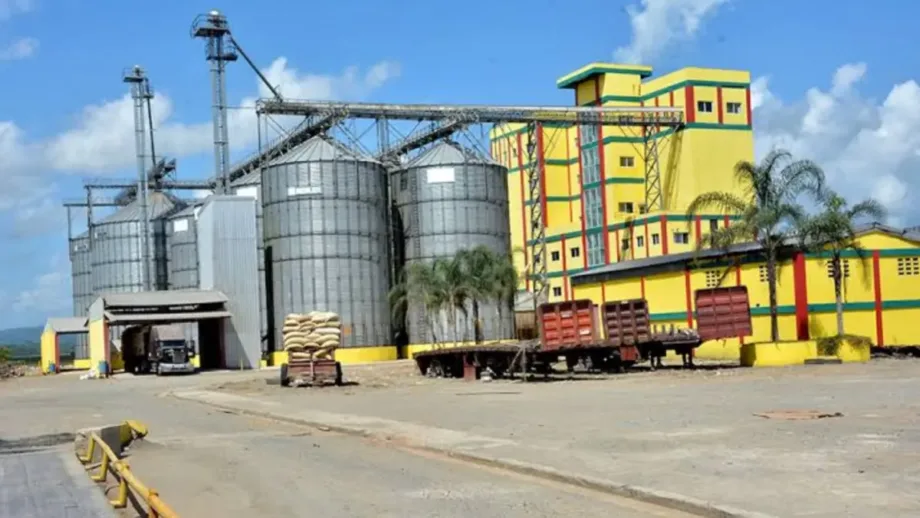
Santo Doming.-Investing in rice production and processing in the Dominican Republic requires a solid capital, as it all starts with the installation of a factory that can cost between US$4 million, US12, US$20 million and up to the astronomical figure of about 500 million dollars.
This is what Germán Despradel, an rice producer with more than half a century of experience and owner of the Yuna Rice Processor, located in the province of Sánchez Ramírez, has been offering advice to those who want to enter the business: “Do not buy or make a factory.” Instead, it recommends to rent one for a year to assess the profitability of the activity before committing large resources.
The warning is in response to the high costs that this industry has to bear, both in infrastructure and in the daily operation, planting, storage and marketing of cereal.
Despradel explained that a small factory can cost between US$4 million and US$12 million, while the medium ones can reach the US$20 million. However, there are facilities with a much higher capacity whose investment, according to their estimates, can exceed the US$500 million, equivalent to 30 billion pesos, using as a reference an exchange rate of 60 pesos per dollar.
“Here are factories, in Dominican Republic, that what I process in a year, they process it in a month. I mean, there are factories that their prices would be above 500 million dollars,” he said during an interview with THE DAY.
Energy cost
Once the factory is installed, another challenge begins: to cover the operating costs. The main costs include the consumption of electrical energy, the monthly bill of which may range from RD$2.5 million to RD$2.7 million, in a medium plant that does not have solar panels.
On the other hand, facilities with alternative energy sources, such as the one operating Despradel, can reduce this expenditure to a range between RD$400,000 and RD$900000 per month.
The high energy consumption is explained by the operation of the industrial machinery and the air conditioning systems necessary to preserve the quality of the cereal.
The producer noted that, in order to obtain a rice of good commercial quality, it is necessary to undergo a process of aging in silos during periods that may extend between six and seven months.
These tanks have air conditioning systems of 10 or 25 tons, according to their characteristics and needs.
“That's a very high cost, but the one who doesn't and has rice inside the silo is off the market,” he said. The storage under controlled conditions allows the quality of rice to be preserved and the risks associated with heat and pests to be reduced.
This requires maintaining adequate temperature conditions and applying plant protection controls to prevent the deterioration of the product.
Despradel revealed that it is currently opening a silo with rice bought in November last year, due to the reduction in consumption on the market.
“We had a consumption of a million 350 thousand quintals and we have fallen to a million 150 thousand,” he said. The payment of staff represents another economic burden for factory owners. The payroll of fixed employees is around RD$750,000 per month, but exceeds one million pesos when the required temporary staff are added during the saffron. Permanent workers include mechanics, accountants, sales agents and technicians responsible for operating machinery.
Job generation
- Producers: The rice industry is an important source of employment in the country. According to the figures provided by the producer, the sector generates between 300,000 and 500,000 direct jobs and brings together 32,000 producers.
The cost of production by task
Investment. High costs are not limited to industrial processing. Agricultural production also requires considerable investment during the approximately 120 days of the sowing and harvesting cycle.
According to Despradel, rice production requires around RD$7,500 per task, from the preparation of the seedling to the collection of the cereal. “A person who spent five thousand is not going to cut four bags of rice. A person who spends seven thousand 500 pesos is going to cut four bags of rice,” he said, explaining the importance of investing.