





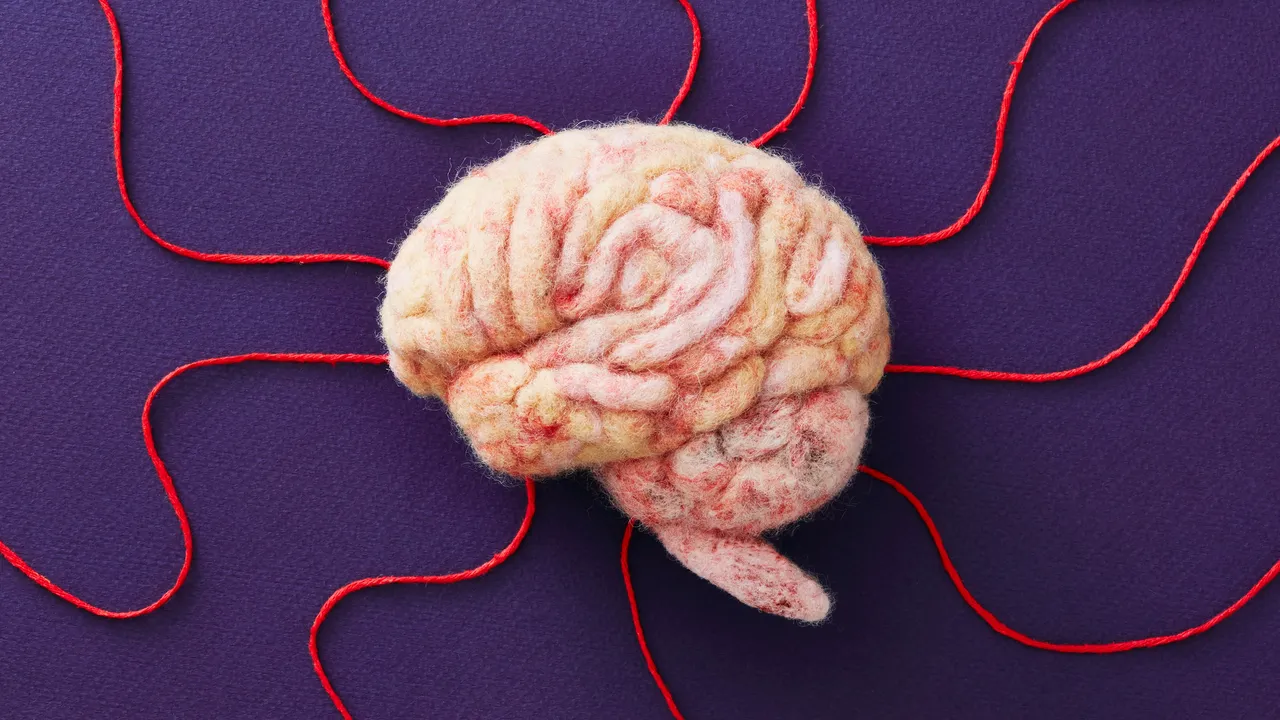
Nothing like explaining Boltzmann's brain hypothesis to break the ice on a romantic date. “Remember how your first kiss was, and now imagine that memory is not real, but a mere illusion that arises from the chaos of the universe.” If you took this advice, your date is likely not to succeed from that point. If so, when you remember that night, you may find some relief in the first words of a new study that addresses the Boltzmann brain hypothesis: “Are your perceptions, memories and observations simply a statistical fluctuation derived from the thermal balance of the universe, without any correlation with the real past state of the universe?” It's better to dream.
The idea that you're nothing but a brain that came out of nowhere a moment ago, with all this and a fictitious story, sounds ridiculous, but it may have crossed your mind at some point. Do you know your memory of the past is real? In simplified terms, this is what the disturbing hypothesis of Boltzmann's brain is about, a mental experiment inspired by the ideas about fluctuations of the Austrian physicist Ludwig Boltzmann (famous for his entropy formula). A study published in Entropy magazine by scientists from the Santa Fe Institute and the University of California suggests that refuting this seemingly absurd idea is not as easy as thought.
Yesterday and tomorrow are the same for physics and they just found another proof of it
At quantum levels, particle systems move indistinctly, whether the date of time goes from past to future, or otherwise.
Not so absurd
Statistical mechanics, the branch of physics that connects the microscopic behavior of particles with macroscopic properties such as temperature or pressure, admits that spontaneous fluctuations can occur in a system in thermal balance. With enough time available, extremely unlikely configurations can arise by chance. This includes, in principle, the exact configuration of neurons that would form a human brain in its entirety, with all its memories and perceptions. Boltzmann's brain.
The intuitive answer to this idea is that the probability of such fluctuation is ridiculously small, and the time that would have to be expected to happen far exceeds the current age of the universe. However, the authors of the paper show that this argument does not close the debate. In fact, when mathematical reasoning is applied rigorously, both the Boltzmann brain hypothesis and the second law of thermodynamics do not allow to rule out one in favour of the other. What a mess.
The knot of the problem lies in circularity. To be not Boltzmann's brains, we trust that our experimental records of the past are reliable. But that reliability depends on the second law of thermodynamics (which entropy grows over time) because it is precisely the irreversible thermodynamics that allow memory to function as a record of the past. And the second law, in turn, we know it thanks to those same records.
The authors formalize this in the following way: they use the theory of stochastic processes to model the evolution of the universe's entropy as a stationary Markov process, that is, one that does not prefer any particular moment of time. What does all this mean? Imagine a sequence of results that follows certain probabilistic rules and whose statistical behavior is the same at any time you observe it. From that point of view, there is no fundamental difference between looking to the past or the future. But there's a problem. The model alone does not tell you from what point you should start describing the story. That reference point you have to set it.
By formalizing both the Boltzmann's brain hypothesis and the past hypothesis (the idea that the second law is explained because the universe began in a very low entropy state, near the Big Bang) the authors discover that both hypotheses have a similar mathematical structure. The two condition the stochastic process of entropy to a single moment in time; they simply differ in which. The first one is anchor to the present, the second one is anchor to the Big Bang.