




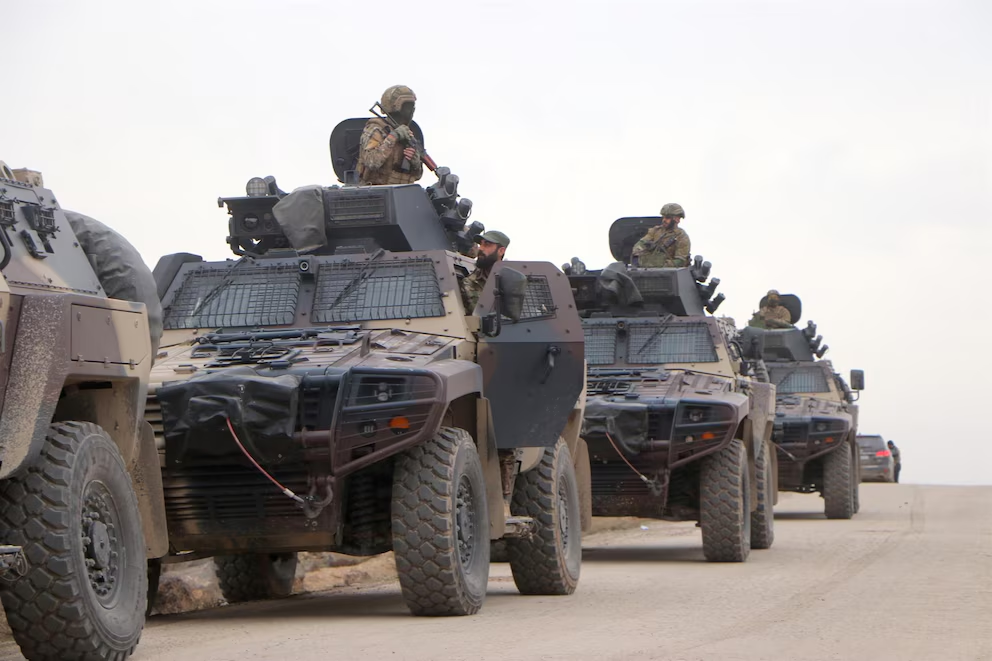
An operation by the Syrian authorities on the border with Iraq ended with the seizure of an advanced shipment of weapons, which officials said was being directed to Hezbollah in Lebanon. Security forces identified a vehicle parked in a border area under suspicious circumstances and, after inspection, discovered long-range missiles, anti-tank missiles and drones hidden inside it.
The Syrian Ministry of the Interior confirmed that the operation allowed for the detection of the shipment before it entered Syrian territory completely. Officials of the agency, cited by the state television Al Ijbariya, indicated that specialized units intercepted the cargo. The vehicle, a tanker, carried the weapons hidden inside it and headed for the port city of Baniyas.
The thorough inspection was carried out at the border crossing point of al-Tanf, a regular point of control between Syria and Iraq. The authorities did not detail the exact point of the border where the seizure occurred or the exact amount of weapons recovered, although they stressed that these were sophisticated military material, including guided missiles and military drones. The Syrian Ministry of the Interior stated that this operation is part of a national strategy to secure borders and prevent the country from becoming an arms-trafficking corridor.
Initial investigations pointed to the shipment being destined for Hezbollah, an organization the Syrian government called “terrorist militia.” The Ministry assured that protecting borders and preserving national sovereignty is among the priorities of the current transitional government.
The current Syrian government strengthened its border controls following the fall of Bashar al-Assad in December 2024
In the official communiqué, the authorities reported that “they will not allow Syrian territory to be used as a corridor, arms trafficking point or platform for activities that threaten Syrian security.”.
Following the seizure, the Iraqi government reported that it formed a high-level committee to investigate the incident and coordinate actions with the Syrian authorities. The joint command of military operations in Baghdad reported that it will work to clarify the smuggling attempt and to strengthen security at the shared border, an area that has historically served as a strategic point for the transfer of arms and fuel between the two countries. The Bukamal-Al Qaim crossing, located between the Syrian province of Deir al Zur and the Iraqi one of Al Anbar, has been the scene of similar operations in recent months.
The Syrian authorities, since the fall of Bashar al-Assad in December 2024, for the offensive of jihadist and rebel forces led by Hayat Tahrir al-Sham, intensified border controls to prevent the flow of Iranian weapons into Lebanon.
The new transitional government, led by Ahmed al-Shara, maintains that its main objective is to disarm the smuggling networks operating in the region, both of weapons, drugs and other illicit property. In December, security forces reported the seizure of SAM-7 anti-aircraft missiles in the Bukamal area in an operation linked to networks related to Hezbollah and Iran.
Hezbollah categorically rejected the allegations made by the Syrian authorities. In a statement broadcast through the Al Manar chain, the group described the claims as unfounded and reiterated that “there are no Hezbollah activities on Syrian territory”
Syrian authorities attributed the final destination of the intercepted shipment to Hezbollah in Lebanon (Reuters)
The route between Iraq and Syria, in particular the road to Baniyas, has become relevant in recent years as a corridor for both fuel and weapons. Iraq assesses the expansion of crude and naphtha exports through Syria, taking advantage of existing agreements that already allow the transport of oil to Baniyas for its subsequent departure abroad. Iraqi officials noted that the Government's objective is to diversify export routes beyond the Gulf.
The regional context also shows international pressure on the Governments of the area. United States President Donald Trump recently urged Syria to take active action against Hezbollah, a group that has been fighting Israel on Lebanese territory since March. The US President held discussions with Syrian President Ahmed al-Shara, who committed to preventing Syria from being dragged into an escalation of conflict in the region.
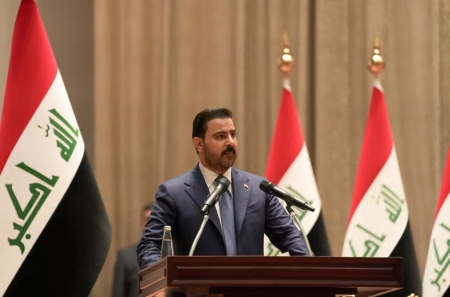
The Lebanese government, for its part, received assurances from Damascus that the current Syrian executive will not intervene in the internal affairs of Lebanon. Meanwhile, Iraq's Prime Minister Ali al-Zaidi addressed the issue of illicit traffic and border security in a recent visit to Washington, where the Trump administration insisted on the need to disarticulate the Tehran-supported militias in the region.