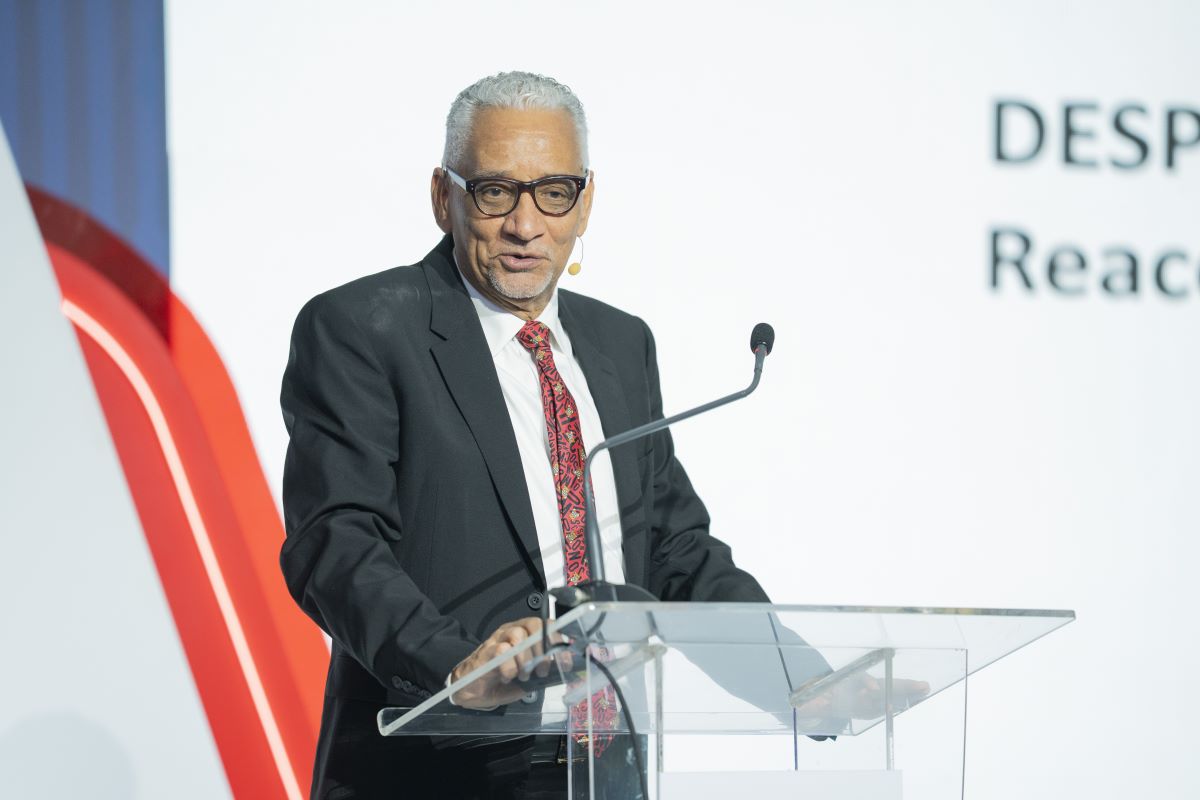
International economist and capital market specialist Raúl Happy stated that the geopolitical conflict in the Persian Gulf has become one of the major risk factors for the world economy, due to its impact on inflation, economic growth and monetary policies.
During his participation in the forum “Business Vision 2026: After shock: risks, reacomoduses and opportunities,” organized by the American Chamber of Commerce of the Dominican Republic (Amchandr), the director of the Happy and Associated RIA and CIDE professor explained that the increase in tensions in the Middle East has led to a significant increase in a geopolitical risk index developed by artificial intelligence and algorithms capable of processing information from media, audios and other content.
He indicated that this indicator has proved to be a major predictor of the behaviour of economic variables such as inflation, gross domestic product (GDP), consumption and exchange rates, as its increases are often associated with slow global growth and increases in commodity prices.
Happy highlighted the strategic importance of the Strait of Ormuz, where they usually travel between 110 and 120 ships a day, mainly oil, natural gas and goods. He noted that the current blockade situation in the area has led to a sharp reduction in maritime traffic, affecting one of the world's main trade routes.
He explained that this route is the basis for approximately 38% of the world's crude oil consumption, about 19% of the liquefied natural gas (LNG), 29% of the liquefied oil gas (LPG) and a significant part of refined and chemical products used in various industries.
By comparing the current crisis with historical events such as the Suez crisis, the Arab oil embargo, the Iranian revolution and the Gulf wars, he held that the disruption of the oil supply caused by the conflict with Iran represents one of the greatest disruptions in recent decades.
However, he noted that the impact has been mitigated by the existence of strategic oil reserves in Western economies and in China, a mechanism that was developed after the energy crises of the 1970s to face supply interruptions arising from geopolitical conflicts.
The economist indicated that, despite the partial closure of key routes and the increase in oil and gas prices, financial markets have shown resilience and the US economy has a growth prospects of about 2.3% for this year.
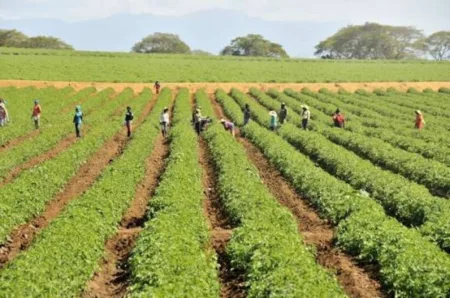
He also warned that the increase in energy is also pressing the prices of food and fertilizer, due to the increased transport costs and the role of oil-derived chemicals in agricultural production.
It argued that part of the reduction in supply has been able to be compensated by pipelines and alternative routes developed by producing countries such as Saudi Arabia and Iraq, although it recognized that the current capacity remains insufficient to fully replace the volume that normally passes through the Persian Gulf.