




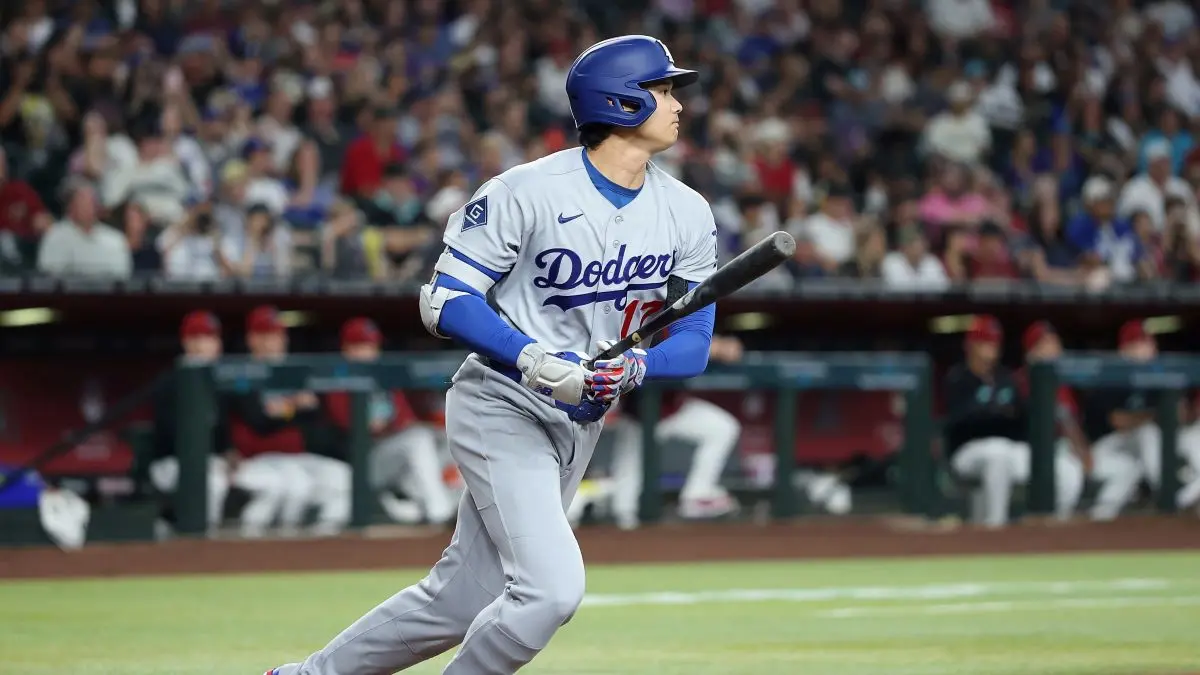
It's been almost two months since the Dodgers have seen Shohei Ohtani batting like the four unanimous JMV times it is.
On the eve of the National League against Braves Divisional Series Game 1, which they expect will be the beginning of a third consecutive race towards the championship, the Dodgers are still not sure what exactly they can expect from their superstar as a designated batter.
“I know that once the lights are lit, the postseason start and the concentration increases,” said manager Dave Roberts before the Dodgers“ training on Friday afternoon at the Dodger Stadium, before the National League Divisional Series. ”I expect good things. Really. We just haven't seen him enough... so I can predict him.".
In the last month, Ohtani has had limited action in the games. After spending 15 days on the list of injured people to attend to persistent problems in the right biceps and left knee, Ohtani returned to the Dodgers when there were only five regular season games left, and left 5-21 (.238), with a double and eight ponches, in addition to a ticket.
Ohtani spent the Dodgers' rest week balancing the rest with the work on his swing, simulating the live bat shifts against his peers and with the Trajekt machine. He ended up feeling good about both his health and his swing, but he recognized the uncertainties with both aspects, and he would probably have to continue to handle his persistent injuries from now on.
“I have not been able to clearly identify the root cause of all this,” said Ohtani through his interpreter Will Ireton on Friday, speaking to the media for the first time since before his stay on the list of injured. “I think that process will happen during the low season, when I'm going to have a little more time to be able to take care of it. But for now, it's something I'm just gonna have to handle.”.
Ohtani came this year looking to fight his first full season as a two-way player with the Dodgers, but the persistent injuries to the biceps and knee that have hit him at least since June derailed those plans and will not launch in this postseason. It had an 8-2 mark with an effective 1.79 in 14 openings, and its last appearance in a game was on July 3, because the knee discomfort became too intense.
In the following two months, L.A. kept open the possibility of Ohtani returning to his two-way role, but his attempt to gradually increase his activity on the mound coincided with a rise in his biceps and knee injuries, as well as a severe slump on the plate. In the 24 games before entering the list of injured, he hit .198 with OPS of .689 and was placed 34 times in 109 appearances to the plate, a clear signal to the Dodgers that the injuries had compromised their swing.
Before that slump, Ohtani was in a full-on JMV fight, batting .296 with OPS of .952 and 26 home runs. He finished the season with 30 home runs, his lower amount in three seasons like Dodger, and his last round of the season arrived on August 18 in Colorado.
Ohtani has had enough rest over the last month, something the Dodgers believe has helped him feel better physically. The Aaron Bates batting coach said that the focus over the last few days has been more on his swing than on his health.
“The physical part, more or less already is leaving it behind,” Bates said. “Now it's just about getting the timing back against different speeds, when you want to start your move, that kind of thing, basically the usual thing for what the batters go through, rather than that he's trying to deal with reaching the physical components.”.
Ohtani is far from being the only player who is leading some physical problem at this point in the season, but the Dodgers still expect him to feel well enough to be a productive bat in the first or second place of the lineup in each game. However, it may be necessary to improve communication between the two parties to ensure that the team can handle it in the right way.
After Ohtani entered the list of injured, the president of baseball operations, Andrew Friedman, said that, although Ohtani was good at communicating with the team, it was not always transparent about how he felt.
“I think we always have open conversations with Sho. And I think this is the time to give it all to everyone,” said General Manager Brandon Gomes. “So the boys are ready to go out and he's no different. And going out to give all he has is all we can ask.”.
With the Dodgers looking to make history in this postseason, no one will really know what they can expect from their superstar until they stand in the batting box. Not even him.
“Whether I have a lot of bat shifts or not, I can know how I feel, especially in my preparation. So that's something I could see,” said Ohtani. “But I do want to get to the afterseason, feel the environment and, again, more or less recalibrate what I have to do.”.