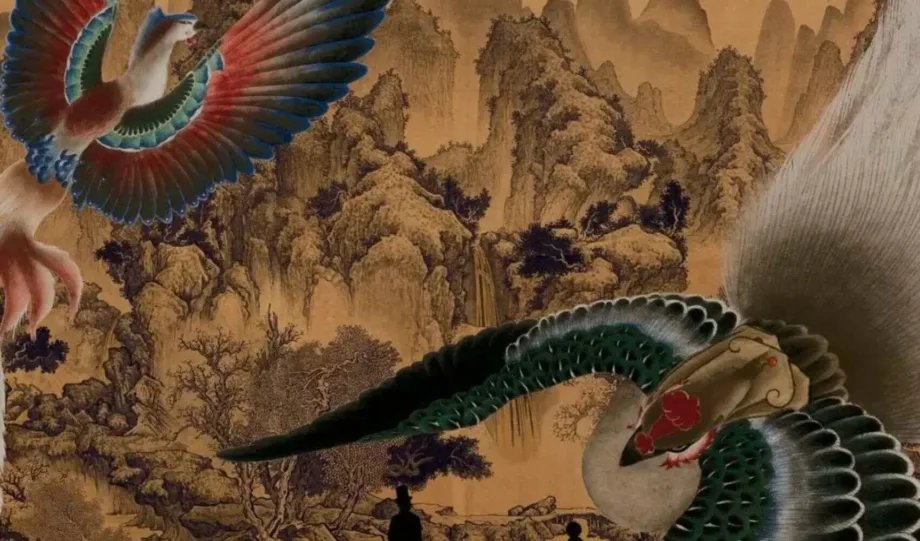
In full discussion of the role of artificial intelligence in animation, interest in the artisans, the real texture and the materials that preserve the human footprint is growing. This search finds a clear example in Magic Atlas (title still without a confirmed premiere in Spain), the first feature film by Chinese artist Sun Xun, raised for a decade with painting, ink on paper, canvas, newspapers and xylography.
Produced in Singapore by Pi Animation Studio and premiered at the Locarno Festival, the film is located in Luocha, a coal empire ruled by fascist industrial despots. The story is told from the look of Xiao Zhi, an orphan child to whom a jailed magician reveals his secrets with a mission: to return to people the memories that the regime has taken from him.
However, the plot seems secondary. Despite its short duration, the tape is taken slowly to start and prefers to build the atmosphere through changing illustrations and dark strokes. In fact, Xiao Zhi often disappears from the screen shortly after questioning the world as they taught him to see it.
A mosaic of styles in constant change
The journey starts with the Sutra Avatamsaka, the Buddhist writing about the past, the present and the future that inhabit the now, and continues with a sequence of waves where painted creatures face. A narrator, with the director's own voice, reflects on his place in the universe as they partake hybrid animals, like a horse with a camera instead of a head, drawn with white lines on black background.
The dominant palette is monochrome, with intense black shaded and abundant linear detail, but Sun never clings to a single style. Suddenly, a color explosion is broken with kaleidoscopic paintings that evoke Pieter Bruegel, or the image jumps into the pen and pencil on paper. The electronic tones of the soundtrack reinforce that onyrical and dissonant feeling.
A dystopia that hard to feel
For Variety, Magic Atlas is more attractive for its aesthetics than for the way it dialects with history, even when it raises ideas as grotesque as a massive surveillance system made up of giant mosquitoes. The Orwellian tone is evident when the generals accuse a child of having false memories, that is, those that the government does not authorize. The suppression of the truth is at least a very recognizable subject at present.
One of the most prominent moments came in response to the isolation caused by the COVID- 19 pandemic, thanks to the international collaboration of artists, as explained by a message from the director near the end. The brightest ideas appear when the film faces its malleable style to social pacification by appropriation of art and entertainment, with winks like a man disguised as a mouse during a festive story.
Even so, to connect emotionally with the film is not simple, more because of its fragmented nature than its symbolism, especially when history becomes more metaphysical. Sun himself has recognized that he is not concerned that the public understands everything. But its technical merits prevent it from being entirely alien and, often, Magic Atlas comes to be a divine.