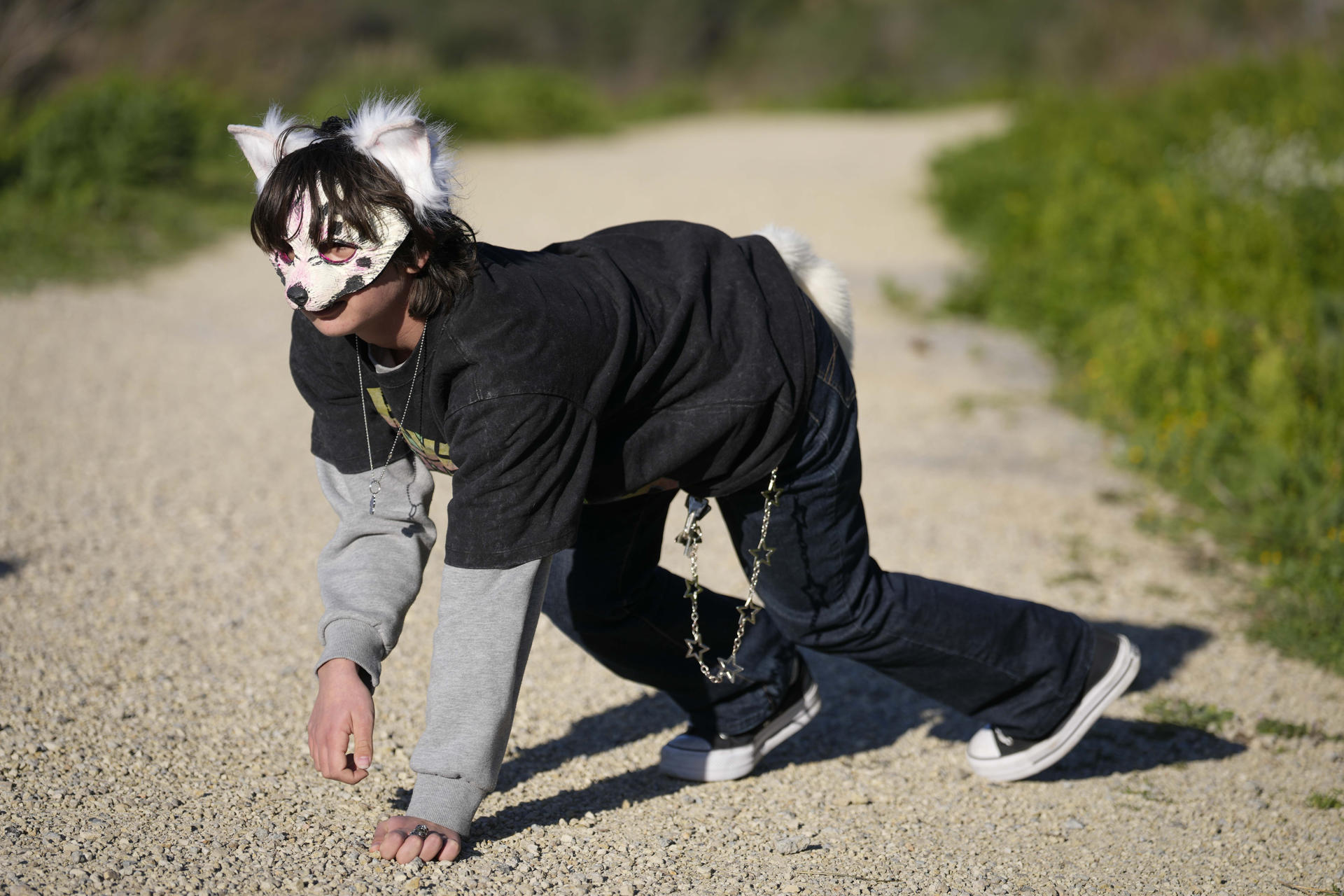
Barcelona.- They ensure that they identify with animals and act as such, covering their faces with masks, moving on four legs, jumping or repelling: they are the 'therians', a phenomenon that has become viral on social networks and that this Friday and Saturday will bring together the members of the community in Spanish cities such as Barcelona and Bilbao.
The 'therian' movement emerged in the 1990s, but now it reaches its maximum popularity thanks to networks such as TikTok, Instagram or YouTube, where these people, mostly adolescents, share videos with their experiences of animal identity.
Read more: The Dominican “therians” can be gathered together
In these videos, which accumulate thousands of Internet visits, you can see 'therians' masked or found in dog, cat, foxes or snakes suits, imitating their movements and sounds. Some even interact with real animals in parks and public sites.
There are 'therians' who spend large sums of money to make it look like an animal, like Toco, a Japanese who paid 12,000 euros to achieve his "dream": becoming a dog border collie with a hyperrealistic canine suit he walks through Tokyo, in the face of the atonite look of pedestrians and other canes.
"I identify with a wolf."
Most 'therians', however, use only mask, tail or ears as an identity sign. This is the case of Fin - a fictional name - a 17-year-old young man from Sant Feliu de Llobregat (Barcelona) who has been part of this community nine years ago and who identifies with an albino grey wolf.
"I feel connected to this animal, I feel that it could easily have been one in my past life," he explains to EFE Fin, who comes to the interview with a mask made by him, hairy ears and a long white tail.
He claims that these accessories are usually put to the street, although they do not usually run on four legs, at least in public.
Fin is aware that his dress is a strange cause and he has fun seeing how people who cross with him react. He understands that they are joking about their appearance or criticizing it, but he regrets "the irrational attacks of anger" that the 'therians' sometimes suffer.
The 'therians' are not considered as such animals, but they ensure that they feel a deep connection with them on a spiritual plane.
"Being 'therian' means to identify itself psychologically, spiritually or neurologically as a non-human animal. It is not a 'hobby', costume or choice, it is an integral part of the identity of the person," explains the Argentine Therian Community on its website.
This is what Fin has been saying, that he feels 'therian 'since he was 8 years old:" People think we're animals and we go all day on four legs, but it's actually a spiritual connection, nothing more. ".
From Latin America to Spain, with increasing popularity
The 'therian' phenomenon has been on the rise for years in Latin American countries such as Mexico, Uruguay or Argentina and now it has arrived in Spain, where the first remains of adeptos have been organized: this Friday will be in Bilbao and Saturday the meeting is in Barcelona.
Lejos del 'boom' que el fenómeno vive en Argentina, Fin explica que en Barcelona son actualmente muy pocos 'therians' y que por eso es difícil montar quedadas.
Pero la visibilidad de los 'therians' va en aumento, como también la curiosidad y sorpresa que genera su forma de actuar.
La psicóloga sanitaria Claudia Rossy explicó a EFE que algunos jóvenes se unen a esta comunidad por curiosidad, porque lo han visto en redes sociales y se encuentran "bien acogidos" en el grupo, mientras que otros "describen una conexión profunda real con un alma animal".
Si los 'therians' pueden "llevar una vida normal" y este sentimiento no les afecta a nivel funcional, señala la experta, entonces no habría problema. "Pero hay que estar muy pendientes de la evolución porque es durante la adolescencia cuando uno desarrolla su identidad como ser humano", subraya.