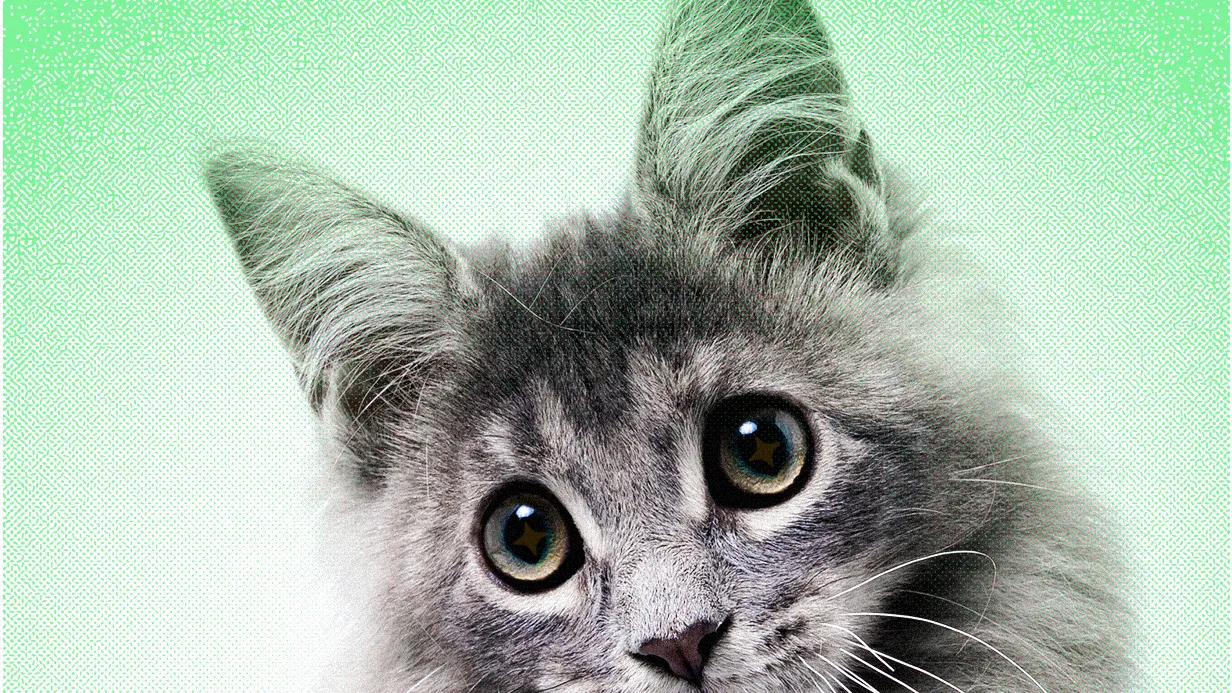
The videos and images generated by IA are destroying one of the greatest and most lasting sources of joy and compassion on the Internet: animals. Whether it's a sailor's image rescuing a polar bear, calves separated from their mothers or a lost pet that has been miraculously found, many people have reached a point where they can no longer believe what they see in their feeds. The explosion of deepfakes and low-quality content generated by IA in recent years has caused widespread frustration among viewers, creators and organizations that defend animals, which has forced everyone to seek technical failures or other revealing signs of the IA intervention among the pixels.
Mibbby Butler was filled with joy one April when he received a text message that said they had found his lost cat, Brooklyn. Apparently, his roommate's boyfriend had taken him away and left him the day before, about 30 minutes away, on the outskirts of Los Angeles. Butler immediately published a "Wanted" sign on social networks and went through the area, when a stranger sent him a photo. In it, Brooklyn appeared sitting on the top of a kitchen while a girl hugged him.
"My little one is fine!" Butler exclaimed. But if I wanted to get it back, I'd have to pay in advance for the supposed temporary care of Brooklyn. That's when he felt she was being scammed and he started to look more closely at the picture.
Brooklyn posed the same way as on the search sheet. In both images a bottle of Torani syrup and a microwave are seen in the background, unless, in the new photo, the label text was distorted, a classic indication that it had been generated by IA. Butler didn't pay, "I didn't know people were scamming with lost pets," and he says he didn't report the incident to the police either because he wasn't sure that a crime had been committed.
Four months later, Brooklyn is still missing.
People fight with the love of animals
The avalanche of falsifications has also not made things easier for the creators of authentic content. The non-profit organization We Animals has published the work of 175 photooperiodists who have documented alleged cases of animal abuse and other abuse in farms, cirques and scientific laboratories. The material can be shocking, which causes scepticism, says Eva von Jagow, the organization's marketing director. For example, the images taken with drone that We Animals shared, in which you see rows and rows of cages allegedly used to house calves separated from their mothers on a dairy farm in Arizona, seem almost perfect to be real.
In the past, some claimed that We Animals" work was either mounted or replayed with Photoshop. It is therefore not surprising that there are spectators who accuse the organization of using the IA, even though it prohibits its photographers from using that technology. "How do we know it's not IA?" said an Instagram user earlier this month about the dairy farm video.
To convince the public that its content is authentic, We Animals plans to share videos behind the scenes and to give more details about the steps that your staff follow to verify the material received. It will also adopt technology that incorporates the source and editing history of photographs and clips into digital files. Victoria de Martigny, the group's visual content director, says that maintaining confidence is fundamental, as it could "open the door to people questioning all the work, and we never want to find ourselves in that situation.".