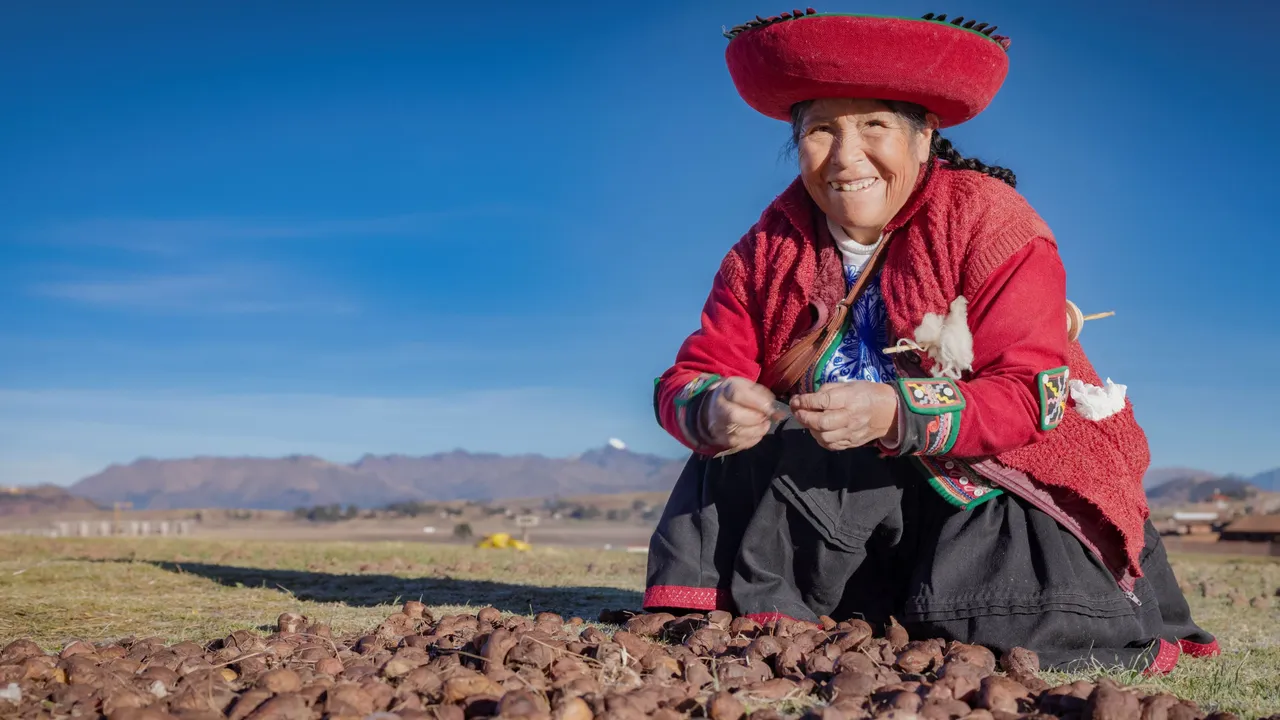
The indigenous peoples of the Andes were the first to domesticate the Pope between 6,000 and 10,000 years ago. Since then, this culture has become a central element of its food and, over time, it would have influenced a genetic adaptation that today distinguishes its descendants in Peru. According to a new research, this population has an exceptional capacity to digest starch, a finding that strengthens the relationship between diet and human genetic evolution.
The study, carried out by scientists from the University of California in Los Angeles (UCLA) and the University of Buffalo, takes up previous research that had found that Andean indigenous populations have genetic variants associated with better starch digestion, compared to groups that incorporated the potato into their food much more recently.
We are losing the ability to digest plants for modern lifestyle
The pre-industrialized societies had three bacteria that could ferment the plants that reached the stomach, today we no longer have them.
Omer Gokcumen, an evolutionary anthropologist at the University of Buffalo and co-author of work, points out that “biologists have long suspected that different human groups have developed genetic adaptations in response to their diet, but there are few cases in which evidence is really solid.”.
The new research sought to explain the origin of this genetic adaptation observed in the Andean peoples. According to the article published this month in Nature magazine, specialists collected blood samples from various indigenous communities in Latin America to study their DNA. Participants included Quechuas from Peru, recruited both in cities at sea level, such as Lima, and in high-altitude regions, including Cerro de Pasco. Also involved were indigenous Mexican Maya speakers of tzeltal, tzotzil and ch'ol, recruited in areas near Palenque, Chiapas.
The information obtained was compared to existing international genetic databases, which included samples of populations from different regions of the world, including Tibetan groups and inhabitants of the Middle East.
After analyzing the genome of more than 3,720 people from 85 different populations, the researchers identified the presence of the AMY1 gene in virtually all participants. This gene is related to the production of amylase, an enzyme generated by salivary glands that helps to decompose complex carbohydrates, such as starch, from the chewing process.
The results showed that most people have an average of seven copies of the AMY1 gene. However, an average of 10 copies were detected among the Quechua indigenous people in Peru, a difference which, according to the authors, could have represented an evolutionary advantage linked to the survival or reproduction of approximately 1,24% per generation.
The researchers argue that the expansion of potato cultivation in the Andes would have indirectly favoured this genetic feature. However, Gokcumen clarifies that the phenomenon does not mean that indigenous peoples developed new copies of the gene simply by consuming this tuber.
“It is not that the Andean indigenous people acquired additional copies of the AMY1 gene once they started eating potatoes. Rather, those with less copies were gradually disappearing from the population, possibly because they had less offspring, while those with more copies survived and transmitted that feature,” the specialist explained.
Los humanos no dejan de evolucionar y su dieta es factor
Bajo esta interpretación, la mayor capacidad para digerir almidón en los pueblos quechuas sería el resultado de un proceso de selección natural que actuó durante miles de años.
The scientific team also explored another possible explanation: that this feature had arisen after the indigenous demographic collapse that occurred after the arrival of Europeans in America in the 15th and 16th centuries, a period marked by epidemics, violence and famine that profoundly transformed the original populations.