





He questions pollution in Hatillo, intervention in Valdesia and litigation over 12 million m ² in Parque Jaragua.
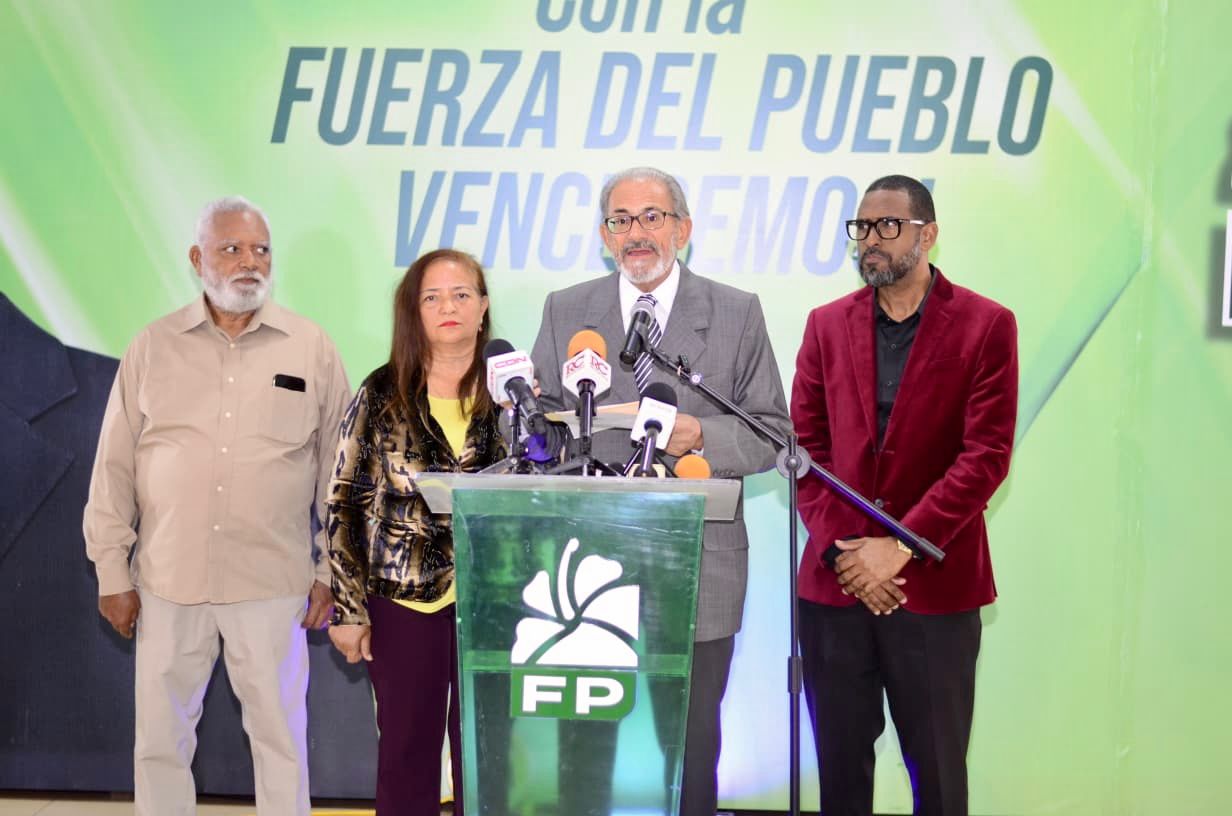
Santo Domingo, D.N. - The head of the Environment Secretariat of the People's Force, Paino Abreu, presented on Wednesday the report entitled “Nubarrones in the Dominican Environmental Panorama,” in which he denounced what he defined as a collapse of the environmental protection system in the country, a product of institutional disability, permissiveness, administrative opacity and an increasing risk to the natural heritage of the nation.
During the presentation of the document, Abreu said that “The Dominican environmental landscape is very cloudy by the inability of the Ministry of the Environment to enforce the mandates of the Law that created it,” stating that the institution is failing in its constitutional role of protection and leaving unanswered situations that compromise strategic ecosystems.
Permisology under question
Abreu began his exhibition by addressing what he described as the “first cloud”: environmental permisology. He recalled that the Ministry announced as its achievement the issue of 6,500 environmental authorisations in 2025, but later admitted that more than 60 % are for minimum impact certifications.
You can read: Human Rights denounces that the director of the CEA becomes “the crazy scapegoat” in the face of irregular expropriation of land
However, he noted that more than 2,500 authorisations remain on which there is no public clarity as to their legal nature. “There are still more than 2,500 authorisations that are not known if they are environmental licences, permits or constances, each of which carries requirements according to their impact,” he said.
He indicated that since 5 December, access to this information was formally requested without the Ministry having responded, which he described as a violation of the Law 200-04 on Free Access to Public Information. In this context, he stated that citizen law opens the possibility of an amparo appeal to force the authorities to be held accountable.
“The Minister must respond,” Abreu emphasized, warning that what is observed is “an unacceptable relaxation of the indicators and parameters of the system for the protection of our natural resources.”.
Pollution in the Hatillo dam
As the second axis of the report, the environmental headline of the FP addressed the situation of the Hatillo dam in the province of Sánchez Ramírez, where there has been a massive flowering of algae.
“For the second time in recent times the water in the Hatillo dam has changed color, appearing clouded by a high profusion of green and pasty lama known as algae flowering or explosive growth of these,” he explained.
Abreu questioned that, although the sampling was announced on 5 December, more than two months later the country has no official explanation. “More than two months later the Ministry of the Environment still has no response to the country and that is INCAPACITY to manage situations that require answers that clear doubts and offer solutions,” he said.
He added that the dam has strategic functions in energy generation, agricultural irrigation, fish production and potential drinking water supply for the capital, and that the lack of a comprehensive diagnosis of the Yuna River basin is a serious failure in environmental management.
Intervention in Valdesia
The third point of the report focuses on the sediment cleaning project of the Valdesia dam, which was apparently implemented by the Dominican Hydroelectric Generation Company (EGEHID).
Abreu indicated that community of the Municipal District Pueblecito- Many Aguas have denounced that the work is being done by opening a road through the Yubazo River, affecting water sources that supply several communities.
As he explained, the environmental permit granted would allow interventions that violate the 30-metre protection strip established by law in the watercourses, and even directly penetrate the river's route over a six-kilometre journey.
The environmental leader requested that all the project documentation be published, including environmental impact studies, technical assessments, executing company and destination of the materials extracted, which, according to community estimates, would be worth billions of pesos.
Litigation over the Jaragua Park
The fourth “nubarrón” presented by Abreu refers to the judicial dispute over over over 12 million square meters within the Jaragua National Park, in the municipality of Oviedo.
He explained that one company obtained a favourable sentence in the High Administrative Court through amparo proceedings, which could open a dangerous precedent with regard to the constitutional protection of protected areas.
Abreu argued that the 2010 Constitution establishes the constitutional supremacy and inalienability and imprescriptibility of the State's property, so any reduction of limits in protected areas requires qualified majority approval from the National Congress.
In this regard, he stated that the Ministry of the Environment did not present the necessary evidence about the park's limits in the audience, nor did he sufficiently clearly defend the constitutional protection of the area, which he considers to be a new institutional failure.
Structural risk to natural heritage
At the conclusion of the presentation, Paino Abreu reiterated that the four cases exposed are not isolated, but symptoms of a structural problem.
“The Ministry of the Environment is failing in its constitutional protection role,” he said, noting that the combination of institutional disability, administrative permissiveness and information opacity is putting Dominican natural heritage at risk.
At the close of the presentation, Paino Abreu said that the People's Force will follow up on each of the cases exposed and will accompany communities in defence of a healthy environment, warning that “other dark clouds will shadow the Dominican environmental landscape” if the current course of environmental governance is not corrected.
Secretariat for Communication@@