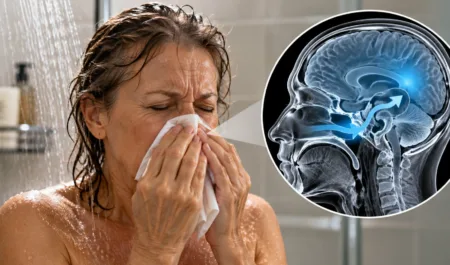




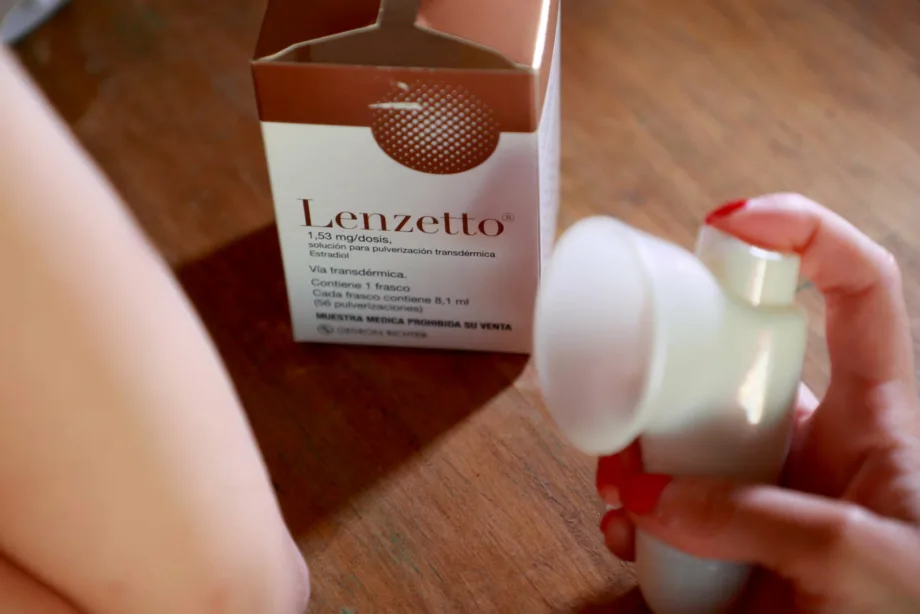
Hormonal therapy for menopause is a difficult paradox to explain: while a scientific review published in Science reinforces the advantages of certain ways of administering estradiol, some of these presentations have become difficult to find in Spanish pharmacies. The problem is not that there is lack of evidence about the differences between treatments, but that the availability of the most favourable option in certain profiles has deteriorated.
The review, prepared by researchers at the Centre for Addictions and Mental Health of the University of Toronto, focuses on a question that for years was simplified: there is no single hormone therapy for menopause. There are more than 200 possible combinations if the hormone used, the amount, frequency, the time of initiation and the route of administration are taken into account.
Among all these possibilities, the authors highlight the formulations that allow to administer estradiol through the skin. Parches, gels and sprays avoid the first step of the medicine through the liver and allow for lower doses. In addition, the revised studies point to a two to four-fold risk of thrombosis lower than that observed with oral estradiol.
The difference is particularly relevant because the choice of treatment is not a purely commercial issue. The route of administration modifies how oestradiol is performed in the body and is therefore part of the benefit-risk balance that each patient should assess with his or her doctor.
The problem appears when the recommended option is not available
In Spain, transdermal presentations are in a difficult way in supply. Lenzetto, a espray of estradiol, has been missing since March; Evopad has suffered supply problems and Estradot will no longer be marketed. Meanwhile, Oestraclin, in gel format, is the available transdermal alternative, although it is not funded by Social Security and its price is much higher than that of Lenzetto.
The consequence is that a question that should be resolved primarily in the medical consultation now incorporates another element: which medicine can actually be found in a pharmacy. Health authorities and specialists study different solutions, including prioritizing transdermal presentations for women who already use them and using other options for new patients when there is no contraindication.
Catalonia has raised another possibility: to allow pharmacies to prepare estradiol by means of master formulas. However, this alternative does not remove all doubts. The absorption through the skin depends not only on the amount of estradiol, but also on the excipients and the formulation used.
The evidence cited by the health authorities itself points to important differences between some formulas made in pharmacy and the authorised medicinal products. The former can achieve a lower and more variable absorption, a circumstance that complicates the precise dose adjustment.
The bad reputation of hormone therapy has a concrete origin
Part of the mistrust that still surrounds these treatments comes from a large study published in 2002: Women's Health Initiative. The study found an increase in certain risks with a specific combination of oral conjugated equine estrogens and medroxyprogesterone.
The subsequent problem was that its results ended up associated for years with hormone therapy in general, despite significant differences between hormones, doses, routes of administration and patient profiles. The requirements fell by more than 60% after the publication of those results.
The Science review replaces that distinction on the table. It does not mean that hormone therapy is suitable for all women or that it is risk-free. It means that assessing treatment as if all options were equivalent can hide relevant differences.
There are also interesting signs about other possible effects of transdermal estradiol. Some recent studies point to benefits on episodic memory and one trial found an increase in the volume of the prefrontal cortex in women treated by this route. However, the researchers themselves warn that these are small studies and that these results still do not allow for definitive conclusions.
A stage of life that still has a research problem
The debate takes on another dimension when the magnitude of symptoms associated with menopause is observed. Shotgun's just a part of the problem. Up to 72 symptoms have been reported and many women experience several symptoms simultaneously during the menopausal transition.
Cognitive and emotional changes also have considerable weight. Mental fog and mood disorders can affect up to 80% of women during this stage, according to the data collected in the review. However, scientific knowledge of menopause remains much lower than that available on other stages and health problems.
The research cited by the authors reflects this inequality: only the 0.2% of public investment for health research in North America over a period of 15 years was devoted to menopause.
Spain now faces an added contradiction. While research insists that the choice of therapy should be individualized and that the route of administration matters, supply difficulties can in practice reduce the range of options available.
The shortage is therefore not just a logistical problem. It can end up conditioning clinical decisions that should depend on the characteristics, needs and risks of each woman. The challenge for the health system is to recover access to the various formulations and to prevent the availability of a medicine from weighing more than the evidence used to choose it. @ globario