



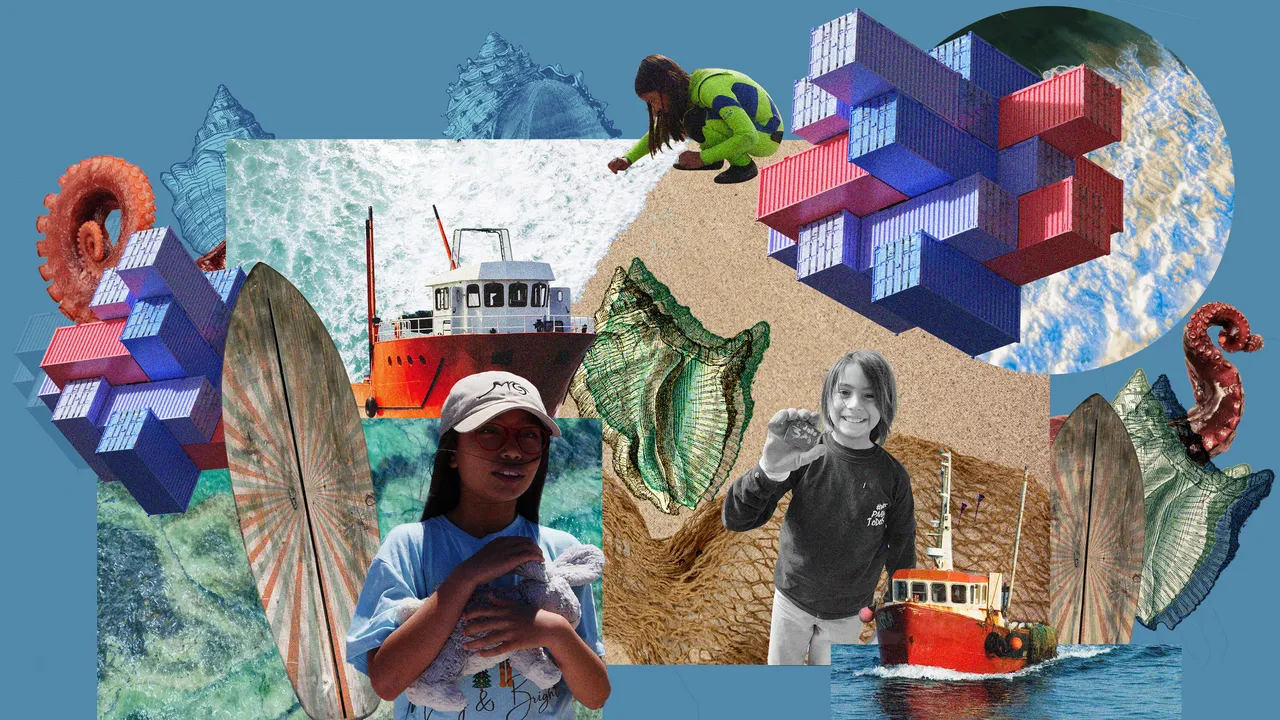
The joy of Mahina, Damian and his friends is in the cold waves of the Mexican Pacific, where they learn to surf and defend the sea. From a very early age they understood that even paradise can be intervened or contaminated.
When they enter their neoprene suits, Renata and Mahina, both nine years old, look at the corkolatas they took out of the womb. They are in 3 Emes, a beach that was about to disappear because of the mega-project of expansion of the port of El Sauzal. If it had happened, this and four more beaches would be between concrete. No swings in the waves, what Alexander had most missed, 14 years old.
In the Bay of All Santos, just over 100 kilometres from the border between Mexico and the United States, Mexican surfing began. Today, those who start in sport are often faced with the village of Manchuria, the oldest fishing village in Ensenada, Baja California, established by Japanese immigrants.
From the beaches of Baja California, these nature guardians take care of the sea to ensure their future.
Yolanda Sierra
Because of its Mediterranean climate, the bay is often wrapped in a mist capable of hiding the sun, but this afternoon of April is not the case. The wind is fresh and the islands are clearly cut over the ocean. The Pacific opposite Baja California is part of the southern section of the California stream that leads thawing water to the equator. It is one of the most abundant coastal environments on the planet, which nourishes the fishing vocation of El Sauzal. The expansion of the port would have redefined this.
Guardians of the Earth
WIRD en Español travels how indigenous peoples, researchers and organizations in Latin America protect their territories against an expanding extractive model.
ArrowThe megaproject that stopped a community
“The port was for container cargo ships and fuel storage,” explains the surfer and doctor in environment and development, Beatriz Ibarra, member of Us and the Sea, one of the twenty citizen organizations that demanded not to follow the project. For them, the initiative was more responsive to business interests than to people, “to meet needs that no longer fit in American ports, such as the Long Beach.”.
10 kilometres from El Sauzal, in the port of Ensenada, goods enter and leave between Asia and America; there is the most important cruise terminal in the Mexican Pacific: in 2025, this port received 360 cruises, 24% more than in 1924; and, because of its geographical connection, 30 kilometres from the port, a storage and liquefaction terminal of US fossil gas supplies was installed that will go to markets in Asia and the Pacific.
The flow of container ships is an environmental pressure for life in ports. Its engines emit gases as oxides of nitrogen and sulphur dioxide that, when they react in the atmosphere, are microscopic particles capable of entering the human body and are related to cardiovascular and respiratory diseases.