Ronald Johnson, US Ambassador to Mexico, announced on Sunday that his country and Mexico signed a "Declaration of Intent" that allows the National Defense Secretariat (Sedena) to access the US Army's digital market to acquire “competitive costs” drone and anti-drone systems.
Although the agreement still does not establish which models Mexico will buy, how many will be and how much will be cost, the “digital market” the ambassador indicated would be the Unmanaged Aircraft Systems Market, a new platform launched by the United States Army in March 2026. It works as a kind of specialized catalogue, only that instead of tupperwars, they are unmanned aero systems (UAS), the technical term used by the military to talk about drones. Users can buy drones according to features such as size, payload and autonomy, consult evaluations and select equipment that has already been through validation processes.
This digital store has proved to be very popular. In just five months since its opening, UAS Market already presupposes $750 million in sales.
The Amazon for the soldier
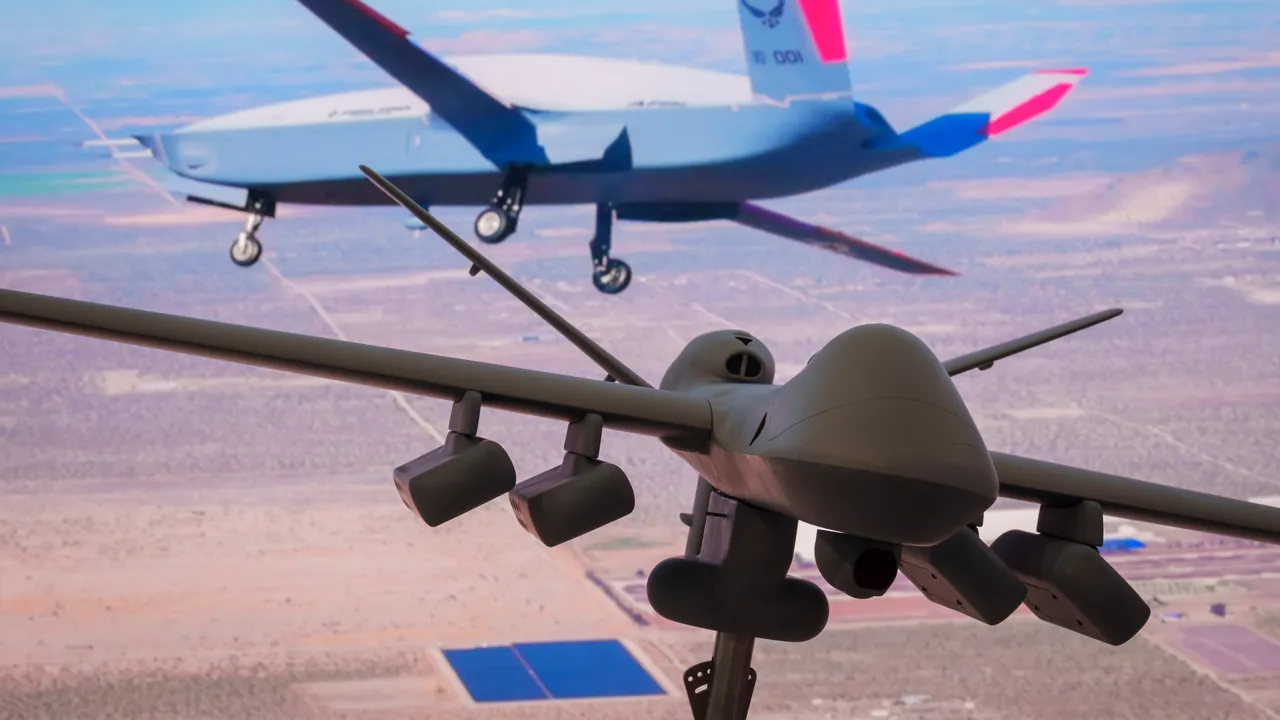
The first possibility within the category of the UAS is the reconnaissance and surveillance vehicles, the so-called spy drones. These are unmanned aircraft equipped with electrooptical and infrared cameras capable of observing targets during the day and night. For the Mexican armed forces, such systems could be particularly useful in monitoring roads, rural areas, strategic facilities or regions where criminal groups operate, providing real-time images without endangering human lives.
The US market ranges from small systems, operated by soldiers on remote ground, to much larger platforms. In fact, the U.S. Army is constantly developing new categories of UAS capable of operating with greater autonomy, scope and payload.
Technology to take down drones
The second component is the C-UAS (Counter- Unmanaged Aircraft Systems) market, i.e. systems designed to detect, follow and disuse unmanned aircraft, an asset that is of greater importance as cartels acquire more drones and learn to operate them more effectively.
C-UAS are not usually presented as a single device. A modern drones defense can combine radars, sensors, cameras, electronic war systems and physical interceptors. The U.S. Army points out that its marketplace includes these technologies, as well as passive solutions to protect facilities.
The wars in Ukraine and Iran have shown why the C-UAS have become priority systems in the war scene: relatively cheap drones can be used for reconnaissance tasks, locate enemy forces or transport explosives. The tactical and strategic expansion of the so-called drone warfare has forced the armies to develop defenses capable of reacting much faster than the threats they face.