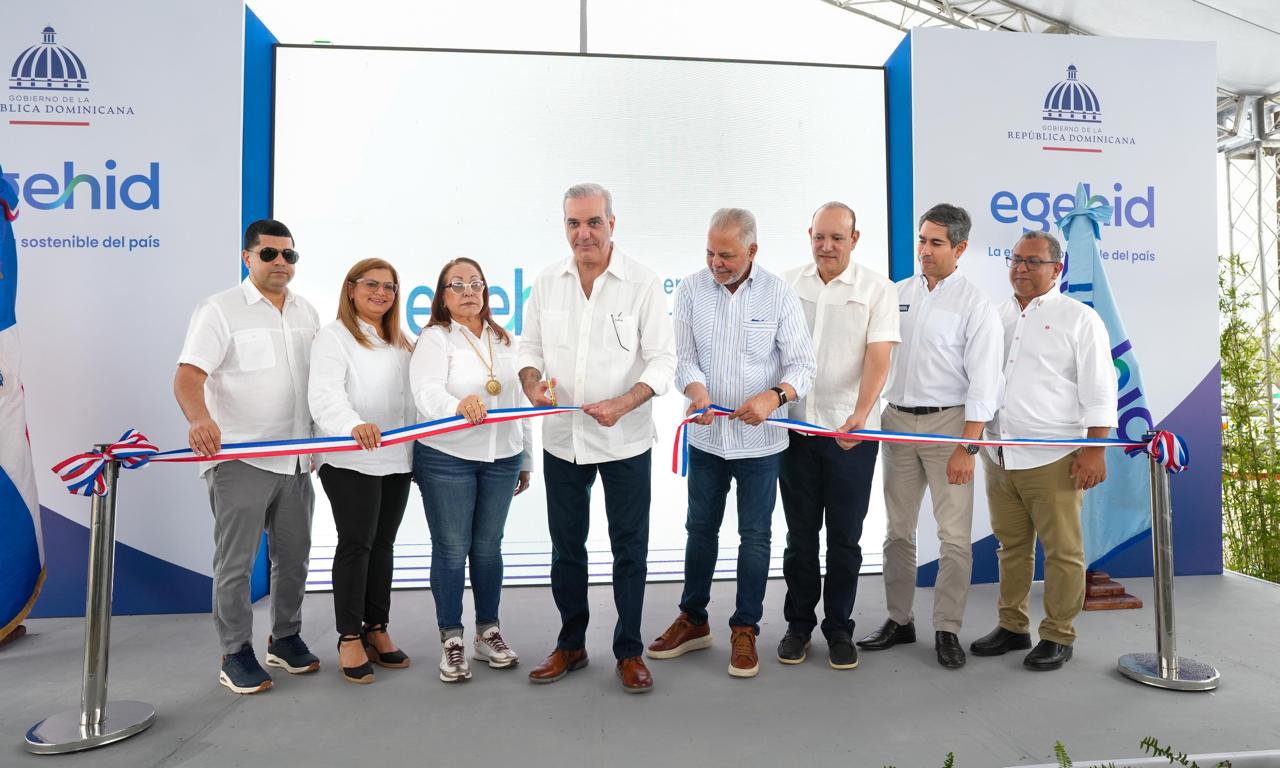
Santiagos.- President Luis Abinader opened the road to the Cross of Pedgio-La Guázuma in San José de las Matas on Saturday as part of his strategy to strengthen agricultural production, to boost tourism and to improve the quality of life in the Santiago mountains.
The work, carried out by the Dominican Hydroelectric Generation Company, covers 9.8 kilometres and required an investment of more than RD$872 million. It directly benefits communities such as Pedregal, Los Montones, Carrizal and La Guázuma, facilitating the connectivity and transport of agricultural products in a key area for the rural economy.
During the same event, the president left the 302 km Rincón de Piedra- Carrizal road with an investment of RD$272 million, which impacts several towns of the serrano municipality.
As EGEHID administrator Rafael Salazar explained, both infrastructure was designed to withstand the climatic conditions of the mountain area, including advanced drainage, containment and road signalling systems.
The interventions included asphalting, reconstructing sewers, gutters, badens and rain drainage works, key elements to ensure the durability of the roads in high-run land.
We recommend reading: Government leaves in operation sections La Gina- Conuco Viejo - Jobo and La Gina- Cemetery of Gina Hueca
On her side, the provincial governor, Rosa Santos, stressed that these works mark a change in historical attention to the saw. He stated that, after years of delay, the area has received significant momentum over the past five years with development-oriented infrastructure projects.
In community representation, Evelyn Rodríguez valued the social impact of the road, noting that it not only improves transit, but also increases access to basic services such as health and education, as well as strengthening internal tourism.
The blessing of the work was in charge of the priest Anderson Fabián Paula, priest of the church Our Lady of Carmen of the area
With these deliveries, the Government seeks to consolidate the transformation of the Santiago mountains into a productive and ecotouristic axis, betting on infrastructure that connect historically isolated communities with the country's main markets.